

How Are SPC Panels Made?
Manufacturing an SPC panel involves several distinct stages, each of which shapes a different aspect of the finished product. Raw materials are first blended into a uniform compound, then formed into a solid core through heat and pressure, before decorative and protective surface layers are applied and the panel is finished to its final dimensions. This article focuses on the manufacturing process itself; for background on the raw materials involved at each stage, see our companion article on what SPC panels are made of.
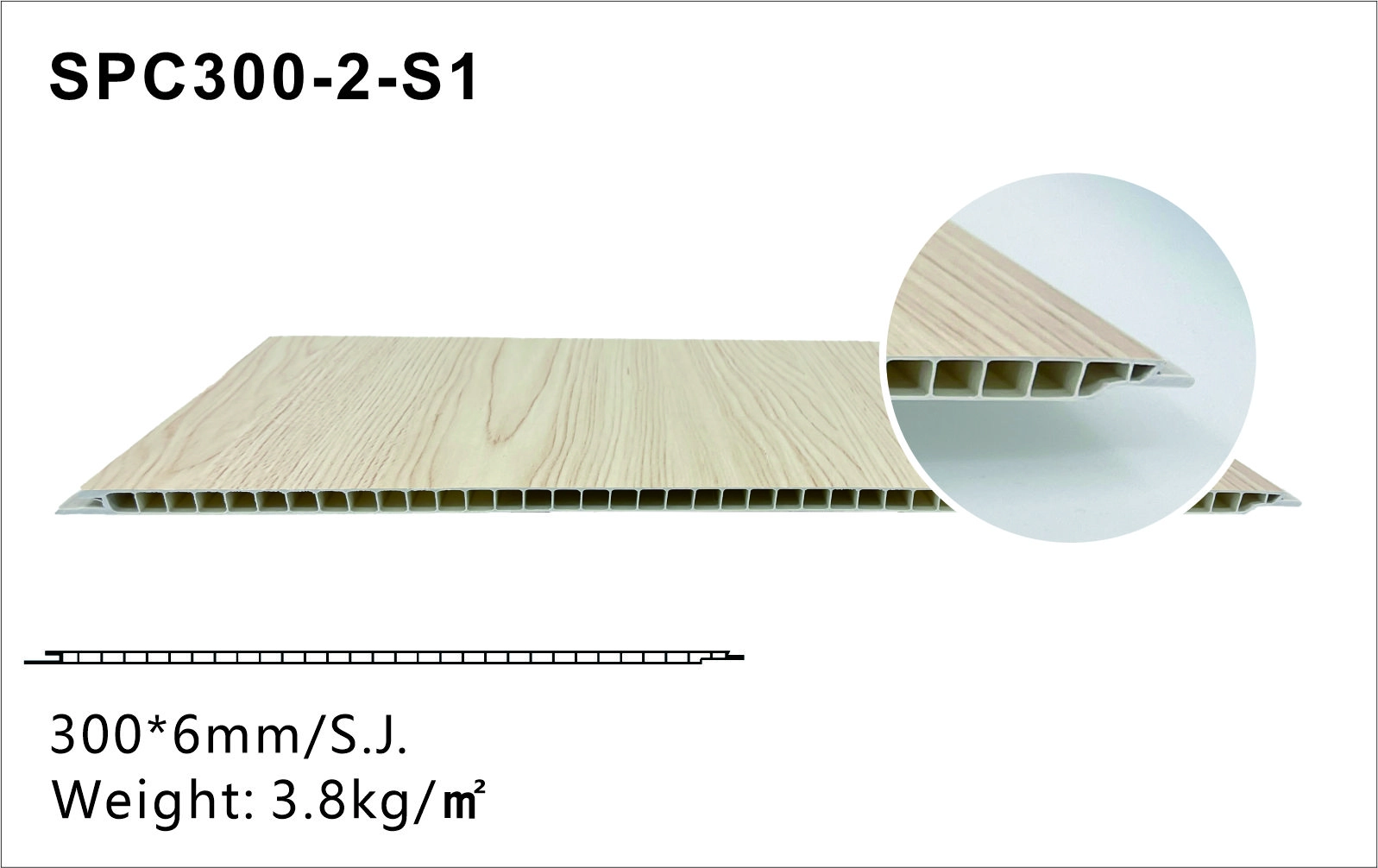
Step One: Mixing the Raw Materials
Production begins with combining calcium carbonate powder, PVC resin, and processing additives in carefully controlled proportions. These ingredients are blended until the mixture reaches a consistent, uniform texture throughout. This step matters more than it might seem: uneven mixing at this stage can lead to inconsistent density or weak spots in the finished panel, so manufacturers typically monitor mixing time, temperature, and ratios closely before moving the compound forward.
Step Two: Extrusion and Core Formation
Once mixed, the compound is fed into an extrusion line, where it is heated and forced through a forming die under continuous pressure. This process compresses the material into a solid, dense core board with a consistent thickness along its full length. The extrusion stage is where many of the panel's core physical properties are established, including its rigidity, density, and dimensional stability.
Cooling and Stabilization
After extrusion, the formed board passes through a cooling stage that allows it to stabilize and set into its final shape before further processing. Proper cooling helps prevent warping and ensures the core maintains flat, even surfaces for the lamination steps that follow.
Step Three: Surface Lamination
With the core board formed, attention turns to the surface. A decorative film, produced through high-resolution printing to replicate finishes such as wood grain, stone texture, or solid colors, is bonded to the core using heat and pressure. In many production lines, a clear protective wear layer is laminated on top of the decorative film in the same process, sealing the pattern beneath a scratch-resistant surface.
This lamination step is what transforms a plain composite board into a finished decorative panel, and consistency here directly affects how well the surface adheres and how the finish performs over years of use.
Step Four: Cutting, Profiling, and Quality Checks
In the final stage, the laminated board is cut to standard panel sizes, and edges are often profiled with locking or tongue-and-groove systems to simplify installation. Before packaging, finished panels typically go through quality checks that assess dimensions, surface appearance, flatness, and edge consistency, helping ensure that each panel meets the intended specification before it leaves the factory.
- Dimensional checks: confirming length, width, and thickness fall within tolerance
- Surface inspection: checking for print alignment, color consistency, and visible defects
- Flatness and edge checks: verifying panels sit flush and edge profiles fit together properly
Together, these four stages take a raw material blend through to a finished, ready-to-install wall panel, with each step contributing to the strength, appearance, and durability of the final product.
If you would like more detail on our production capabilities or specific panel specifications, Bingochic is glad to walk you through our manufacturing process for an upcoming project.
Post time: Sep-15-2026
